
(
Jan 1, 2026
)
How to Improve LLM SEO on Your Framer Site: The 2026 Playbook
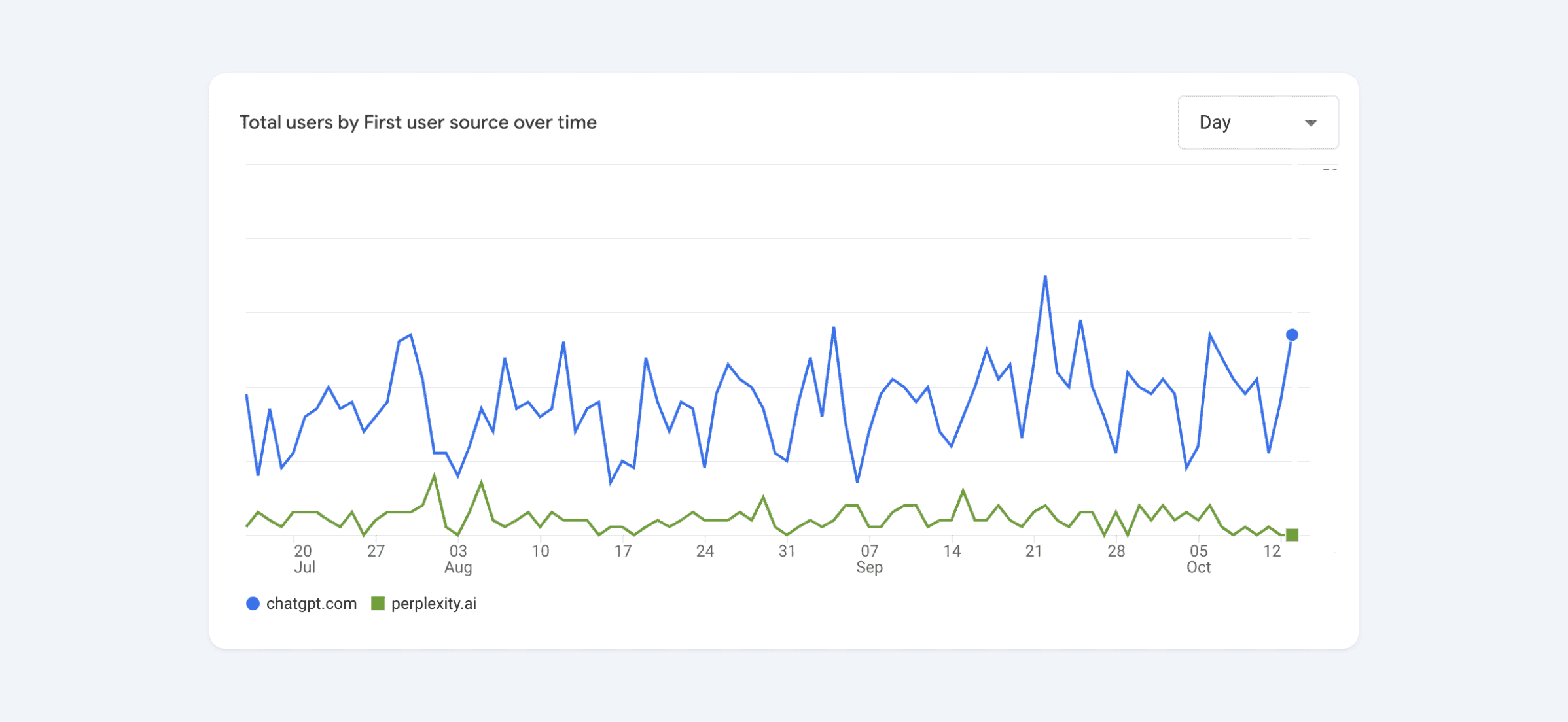
LLM SEO (Large Language Model Search Engine Optimization) is the new frontier of search. To win in 2026, you must pivot from "optimizing for keywords" to "optimizing for credibility and structure." AI models like Perplexity, Gemini, and SearchGPT don't just look for links; they look for verifiable facts and clear data structures that they can confidently cite as a source.
The Hierarchy of LLM Optimization
At AethrDesign, we’ve integrated these strategies into our Framer workflow to ensure our clients aren't just found by humans, but cited by AI.

Strategy | Traditional SEO Focus | LLM SEO Focus |
Content Type | Engaging & Persuasive | Factual & Verifiable |
Data Format | Paragraphs & Images | Tables, Lists, & JSON-LD |
Authority | Backlink Count | Citation Accuracy & Source Reliability |
Structure | Visual Hierarchy | Semantic & Machine-Readable Hierarchy |
1. Treat Your Content Like a Reference Manual
AI models prefer factual, measurable outcomes over marketing fluff. To be "chosen" as an answer:
Use Concrete Data: Instead of saying "Our software is fast," say "Our software reduces latency by 45% based on Q3 internal benchmarks".
Structured Formatting: Use Tables, Numbered Lists, and Comparison Blocks. These are significantly easier for LLMs to parse and extract facts from than long-form prose.
Cite Your Sources: If you reference a statistic, link to the source or name the data origin (e.g., "According to Google Search Console data...").
2. Implement CMS-Driven Schema (JSON-LD)
Structured data is the bridge between your design and the LLM's understanding.
Framer Advantage: Use Framer’s Code Injection to add JSON-LD schema to your pages.
FAQ Schema: Adding an FAQ section with proper schema markup increases the likelihood of your content appearing in "People Also Ask" boxes and AI-generated summaries.
3. Leverage Programmatic SEO for Authority
LLMs need a high volume of related data points to establish your site as a topical authority.

CMS Collections: Use Framer CMS to build out specialized landing pages (e.g., industry-specific or city-specific guides).
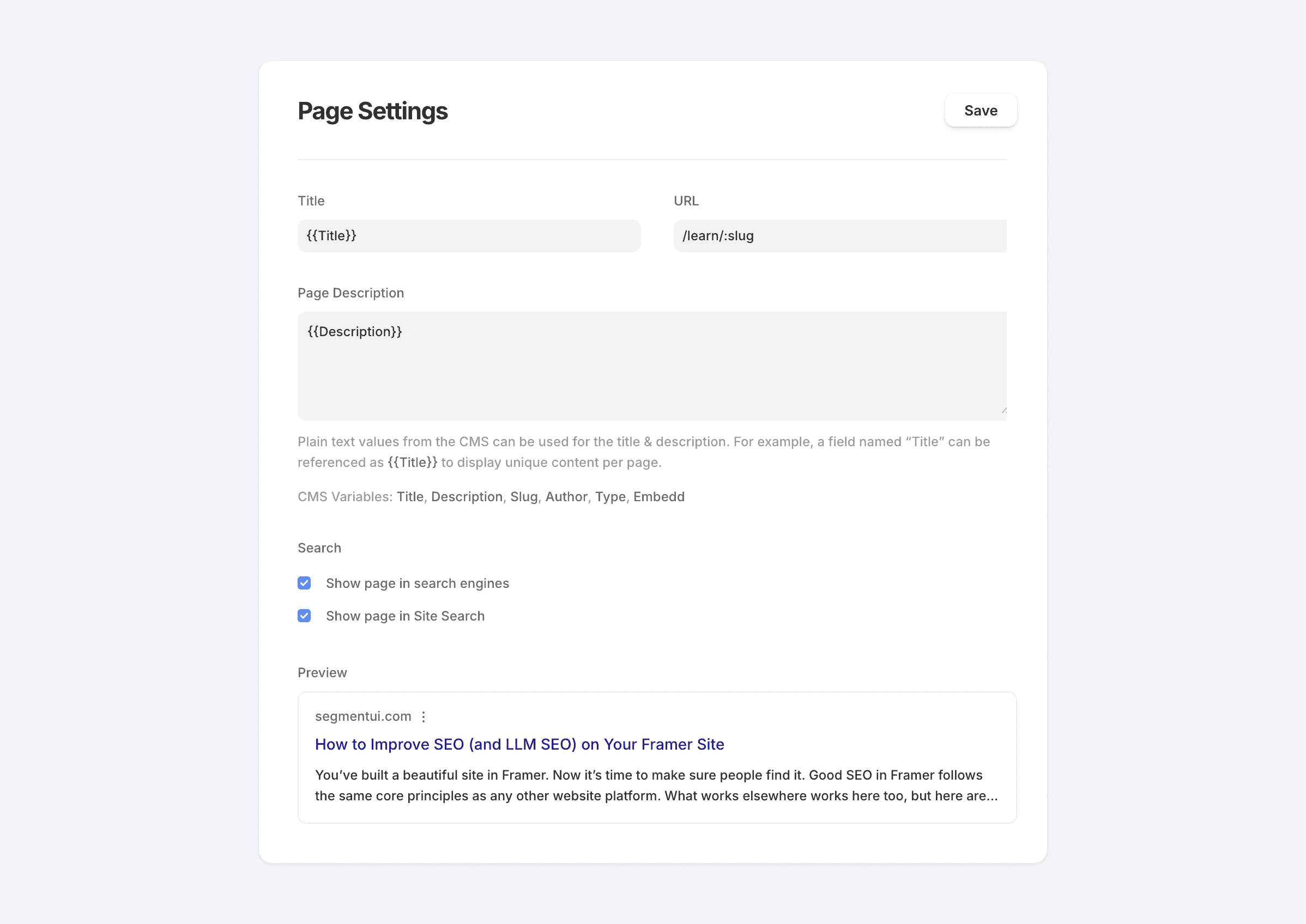
Dynamic Metadata: Map your CMS fields to your Meta Titles and Descriptions (e.g.,
Best Design Solutions for {{Industry}}) to ensure every page is uniquely optimized for specific AI queries.
4. Build "Link-Worthy" Interactive Tools
One of the highest-impact ways to improve authority is by creating tools that other sites want to link to.
Custom Code Components: Use Framer’s React-based code components to build calculators, ROI estimators, or generators.
The Moat: High-utility tools generate recurring organic traffic and high-quality backlinks, which remain a primary signal for AI models when determining which "source" is most trustworthy.
Red Team Analysis (Devil's Advocate)
The Risk: Over-optimizing for "AI readability" can sometimes result in dry, robotic content that fails to convert the human users who actually land on the page.
AethrDesign Solution: We balance this by using Framer's Motion and Scroll Transforms to keep the human experience immersive, while keeping the underlying HTML structure and JSON-LD perfectly "clean" for the machines.
Cost-Benefit: While implementing custom Schema and Code Components requires a higher initial investment in design and development, the ROI is a significant lead in the "AI-first" search landscape before your competitors even realize the rules have changed.
Ready to future-proof your site? Let’s Talk about building a Framer site that AI models love to cite.
More News
Explore insights, tips, and trends to elevate your brand.

(
Jan 1, 2026
)
How to Improve LLM SEO on Your Framer Site: The 2026 Playbook
LLM SEO (Large Language Model Search Engine Optimization) is the new frontier of search. To win in 2026, you must pivot from "optimizing for keywords" to "optimizing for credibility and structure." AI models like Perplexity, Gemini, and SearchGPT don't just look for links; they look for verifiable facts and clear data structures that they can confidently cite as a source.
The Hierarchy of LLM Optimization
At AethrDesign, we’ve integrated these strategies into our Framer workflow to ensure our clients aren't just found by humans, but cited by AI.

Strategy | Traditional SEO Focus | LLM SEO Focus |
Content Type | Engaging & Persuasive | Factual & Verifiable |
Data Format | Paragraphs & Images | Tables, Lists, & JSON-LD |
Authority | Backlink Count | Citation Accuracy & Source Reliability |
Structure | Visual Hierarchy | Semantic & Machine-Readable Hierarchy |
1. Treat Your Content Like a Reference Manual
AI models prefer factual, measurable outcomes over marketing fluff. To be "chosen" as an answer:
Use Concrete Data: Instead of saying "Our software is fast," say "Our software reduces latency by 45% based on Q3 internal benchmarks".
Structured Formatting: Use Tables, Numbered Lists, and Comparison Blocks. These are significantly easier for LLMs to parse and extract facts from than long-form prose.
Cite Your Sources: If you reference a statistic, link to the source or name the data origin (e.g., "According to Google Search Console data...").
2. Implement CMS-Driven Schema (JSON-LD)
Structured data is the bridge between your design and the LLM's understanding.
Framer Advantage: Use Framer’s Code Injection to add JSON-LD schema to your pages.
FAQ Schema: Adding an FAQ section with proper schema markup increases the likelihood of your content appearing in "People Also Ask" boxes and AI-generated summaries.
3. Leverage Programmatic SEO for Authority
LLMs need a high volume of related data points to establish your site as a topical authority.

CMS Collections: Use Framer CMS to build out specialized landing pages (e.g., industry-specific or city-specific guides).
Dynamic Metadata: Map your CMS fields to your Meta Titles and Descriptions (e.g.,
Best Design Solutions for {{Industry}}) to ensure every page is uniquely optimized for specific AI queries.
4. Build "Link-Worthy" Interactive Tools
One of the highest-impact ways to improve authority is by creating tools that other sites want to link to.
Custom Code Components: Use Framer’s React-based code components to build calculators, ROI estimators, or generators.
The Moat: High-utility tools generate recurring organic traffic and high-quality backlinks, which remain a primary signal for AI models when determining which "source" is most trustworthy.
Red Team Analysis (Devil's Advocate)
The Risk: Over-optimizing for "AI readability" can sometimes result in dry, robotic content that fails to convert the human users who actually land on the page.
AethrDesign Solution: We balance this by using Framer's Motion and Scroll Transforms to keep the human experience immersive, while keeping the underlying HTML structure and JSON-LD perfectly "clean" for the machines.
Cost-Benefit: While implementing custom Schema and Code Components requires a higher initial investment in design and development, the ROI is a significant lead in the "AI-first" search landscape before your competitors even realize the rules have changed.
Ready to future-proof your site? Let’s Talk about building a Framer site that AI models love to cite.
More News
Explore insights, tips, and trends to elevate your brand.

(
Jan 1, 2026
)
How to Improve LLM SEO on Your Framer Site: The 2026 Playbook
LLM SEO (Large Language Model Search Engine Optimization) is the new frontier of search. To win in 2026, you must pivot from "optimizing for keywords" to "optimizing for credibility and structure." AI models like Perplexity, Gemini, and SearchGPT don't just look for links; they look for verifiable facts and clear data structures that they can confidently cite as a source.
The Hierarchy of LLM Optimization
At AethrDesign, we’ve integrated these strategies into our Framer workflow to ensure our clients aren't just found by humans, but cited by AI.

Strategy | Traditional SEO Focus | LLM SEO Focus |
Content Type | Engaging & Persuasive | Factual & Verifiable |
Data Format | Paragraphs & Images | Tables, Lists, & JSON-LD |
Authority | Backlink Count | Citation Accuracy & Source Reliability |
Structure | Visual Hierarchy | Semantic & Machine-Readable Hierarchy |
1. Treat Your Content Like a Reference Manual
AI models prefer factual, measurable outcomes over marketing fluff. To be "chosen" as an answer:
Use Concrete Data: Instead of saying "Our software is fast," say "Our software reduces latency by 45% based on Q3 internal benchmarks".
Structured Formatting: Use Tables, Numbered Lists, and Comparison Blocks. These are significantly easier for LLMs to parse and extract facts from than long-form prose.
Cite Your Sources: If you reference a statistic, link to the source or name the data origin (e.g., "According to Google Search Console data...").
2. Implement CMS-Driven Schema (JSON-LD)
Structured data is the bridge between your design and the LLM's understanding.
Framer Advantage: Use Framer’s Code Injection to add JSON-LD schema to your pages.
FAQ Schema: Adding an FAQ section with proper schema markup increases the likelihood of your content appearing in "People Also Ask" boxes and AI-generated summaries.
3. Leverage Programmatic SEO for Authority
LLMs need a high volume of related data points to establish your site as a topical authority.

CMS Collections: Use Framer CMS to build out specialized landing pages (e.g., industry-specific or city-specific guides).
Dynamic Metadata: Map your CMS fields to your Meta Titles and Descriptions (e.g.,
Best Design Solutions for {{Industry}}) to ensure every page is uniquely optimized for specific AI queries.
4. Build "Link-Worthy" Interactive Tools
One of the highest-impact ways to improve authority is by creating tools that other sites want to link to.
Custom Code Components: Use Framer’s React-based code components to build calculators, ROI estimators, or generators.
The Moat: High-utility tools generate recurring organic traffic and high-quality backlinks, which remain a primary signal for AI models when determining which "source" is most trustworthy.
Red Team Analysis (Devil's Advocate)
The Risk: Over-optimizing for "AI readability" can sometimes result in dry, robotic content that fails to convert the human users who actually land on the page.
AethrDesign Solution: We balance this by using Framer's Motion and Scroll Transforms to keep the human experience immersive, while keeping the underlying HTML structure and JSON-LD perfectly "clean" for the machines.
Cost-Benefit: While implementing custom Schema and Code Components requires a higher initial investment in design and development, the ROI is a significant lead in the "AI-first" search landscape before your competitors even realize the rules have changed.
Ready to future-proof your site? Let’s Talk about building a Framer site that AI models love to cite.
More News
Explore insights, tips, and trends to elevate your brand.
Share feedback
Share feedback
Share feedback